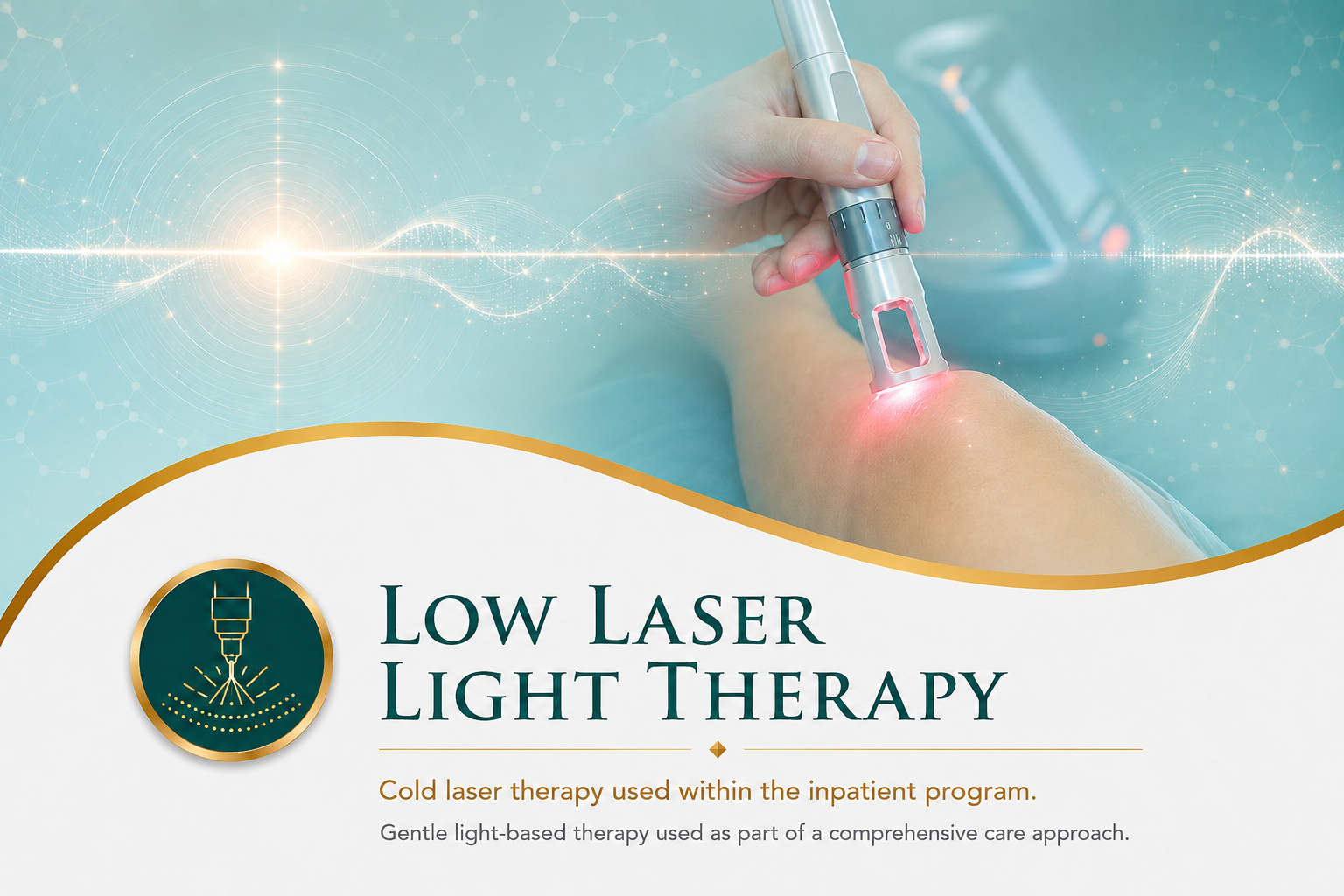
Low-Level Laser Therapy (LLLT)
At CMN Hospital, our Advanced Cancer Treatment (ACT) program includes Low-Level Laser Therapy (LLLT) as an essential component of our comprehensive cancer treatment protocol. LLLT leverages the unique properties of laser light to target cancer cells, providing a precise and effective treatment option. This therapy uses low-intensity laser light to target specific areas of the body, selectively addressing cancer cells and abnormal cells that may develop into cancer by utilizing the unique absorption properties of tumor cells.
Low-Level Laser Therapy is also known as cold laser therapy. It is a gentle, light-based therapy used at CMN Hospital as part of Dr. Edgar Payán’s inpatient cancer treatment program.
How LLLT Works
Low-Level Laser Therapy uses low-intensity laser light directed toward specific areas of the body. The therapy is based on the principle that tumor cells may absorb light of different wavelengths than normal cells. By selecting the appropriate wavelength, LLLT can precisely target abnormal cells while minimizing unnecessary impact on surrounding healthy tissue.
- Reactive Oxygen Species (ROS): When laser light is absorbed by cancer cells, it can trigger photodynamic reactions that produce reactive oxygen species. These ROS may cause oxidative stress and cellular damage, contributing to the destruction of cancer cells.
- Induced Apoptosis: LLLT may help induce apoptosis, also known as programmed cell death, in cancer cells. This process helps eliminate abnormal cells in a more controlled manner.
- Wavelength Targeting: Tumor cells can absorb light differently than normal cells. By selecting the appropriate wavelength, LLLT can be used with greater precision.
- Light Penetration: Laser light penetrates the skin and reaches targeted cells. When tumor cells absorb the laser light, it may disrupt cellular activity and inhibit survival and proliferation.
Scientific Benefits of LLLT
- Targeted Cancer Cell Destruction: By selecting the appropriate wavelength, LLLT can precisely target cancer cells while sparing healthy cells. This precision may help minimize damage to surrounding tissues and reduce side effects.
- Localized Treatment: LLLT is a local treatment that focuses on specific areas of the body, making it useful for targeting tumors and abnormal cells without affecting the entire body.
- Minimally Invasive: LLLT is a gentle, non-invasive treatment that provides therapeutic benefits without significant discomfort or recovery time.
- Enhanced Immune Response: The destruction of cancer cells by LLLT may stimulate the immune system to recognize and attack remaining cancer cells, helping enhance the overall effectiveness of treatment.
- Combination With Other Therapies: LLLT can be combined with other integrative therapies to support a more comprehensive cancer treatment plan.
LLLT for Bone Metastasis and Pain Management
LLLT has shown promising results in the treatment of bone metastasis and pain management. Studies have demonstrated that LLLT may promote bone healing and regeneration by enhancing angiogenesis, the formation of new blood vessels, and osteogenic differentiation, the formation of bone cells.
This can be particularly meaningful for patients with bone metastasis because it may help reduce pain while supporting bone density, strength, and tissue repair during care.
Safety of LLLT
There are many different forms and models of LLLT machines, and it is important to understand that the LLLT used at CMN Hospital is administered under professional medical supervision. When applied appropriately, side effects are generally mild and may include temporary redness or discomfort at the treatment site.
Advanced monitoring techniques and precision equipment help ensure that laser light is applied accurately, minimizing unnecessary risk. Research and clinical studies have examined the safety and efficacy of LLLT in targeting cancer cells and supporting tissue response.
Efficacy of LLLT
Research and clinical trials have examined the effectiveness of LLLT in targeting and destroying cancer cells. The therapy’s ability to selectively target tumor cells while sparing healthy tissues has been studied in relation to cancer care, tissue response, inflammation, bone support, and pain management.
At CMN Hospital, Low-Level Laser Therapy may be included within Dr. Payán’s inpatient program as part of a comprehensive cancer treatment approach. Therapy decisions are based on the patient’s diagnosis, condition, prior treatments, imaging, laboratory studies, symptoms, strength, and clinical response during care.