
Healing Science Breakthroughs
Exploring New Paths to Cancer Recovery
Choosing Cancer Treatment

Today we would like to address one of the most frequent conversations that arise when we first contact potential patients. Oftentimes, we are the introduction to alternative cancer treatment because we are usually contacted after a potential patient has undergone traditional therapies such as chemotherapy or radiation.
We have found that the people we talk to about coming to CMN tend to feel pressure from their families, to make a traditional medicine-based decision… from their insurance, to choose a cost-effective program… and from their cancer, to make a decision fast. We are writing this blog to reassure you and remove the anxiety of choice. We know and understand how intimidating the unknown can be, and we want this to be a supportive resource you can turn to that reaffirms your power: you know yourself better than anyone else, and you are in complete control of your body and health. Alternative cancer treatment is a credible option that you should genuinely consider. We will break down the science that explains how we learn to adapt to new perspectives and how science affirms the validity of our alternative cancer treatments.
The Science of Adapting to Change
We change daily, and oftentimes without notice. We may leave the house a minute later than intended because we subconsciously check our appearance in the mirror one last time; we may decide to rearrange the order of our daily chores or that we no longer like the taste of a certain dish. These changes seem to go on relatively swiftly and without protest. However, we struggle to adapt to some changes in our lives.
For example, we may experience nervousness when we move out of our parent’s house for the first time or contemplate going against tradition and engaging in alternative cancer treatments. Our reasoning for moving out or abandoning traditional medicine is rooted in logic: we want to grow up and mature, and the traditional treatments aren’t working. The phenomenon that describes how we change our minds in these types of circumstances is known as brain plasticity. “Brain plasticity, also known as neuroplasticity, is a term that refers to the brain's ability to change and adapt as a result of experience. When people say that the brain possesses plasticity, they are not suggesting that the brain is similar to plastic. Neuro represents neurons, the nerve cells that are the brain's and nervous system's building blocks, and plasticity refers to the brain's malleability.”[1]
To further break this down, recall that “the human brain is composed of approximately 86 billion neurons;” plasticity allows our brain to renew and reorganize the structure of neurons indefinitely. 1 This validates the claim that we are evolving humans with the remarkable ability to change in response to life experiences and internal and external stimuli.
Relating this to choosing alternative cancer treatment over traditional medicine, research supports the notion that we are consistently evolving, but change isn’t effortless. Major decisions and the changes they bring about require us to be mindful and trusting; there needs to be a period for you to adapt to the ‘new.’ Allow yourself the time you need, and rely on your support system; they are truly there for you and want to support you in your decisions. Have faith in the fact that you know yourself best. You want what is best, not only for you but for the people around you, and just because something is not traditional does not mean that it is invalid or lacks credibility.
Alternative Cancer Treatment: How We’re Different
CMN has posted extensively about our treatments: you can view our treatment summary here.
CMN works hard to stay on top of the newest research and medical advances that help fight your cancer aggressively. We see health for the whole picture: rather than just fighting the cancer cells, we also incorporate treatments that stimulate your own body’s healing powers. We incorporate science that has been proven consistently for decades. For example, the immune system fights off disease; as such, we incorporate Vitamin C into our treatments in a way that boosts your immunity and helps your body fight cancer alongside our other therapies.
What makes us different and a leader in alternative cancer treatment is that we do not just target the disease: we stand by comprehensive care that helps you heal and grow emotionally and mentally. Our doctors and nursing staff see you as an individual, not a medical chart. We stand by our ability to treat you with the utmost level of respect, professionalism, and kindness, but we go further: because we know how important your support system is, we make ourselves available for you to lean on, talk to, and grow with. We are there for you every step of the way and consistently work to cultivate the strongest doctor-patient bond possible. You are the leader of your health and the captain of this team, and we want to help you get your health back!
For More Information
CMN is an alternative cancer treatment hospital that aims to serve our patients with the highest levels of transparency, comfort, respect, and compassionate care. We treat cancer with a multi-dimensional plan, fighting cancer physically while helping you heal mentally and emotionally. We are located in Mexico, and as such, we can offer treatments that have yet to be approved by the FDA that are considered highly advanced, innovative, and cutting-edge in the field of cancer treatment. To get in touch with us and discuss coming to CMN, you can contact us here or email us at info@cmnact.com.

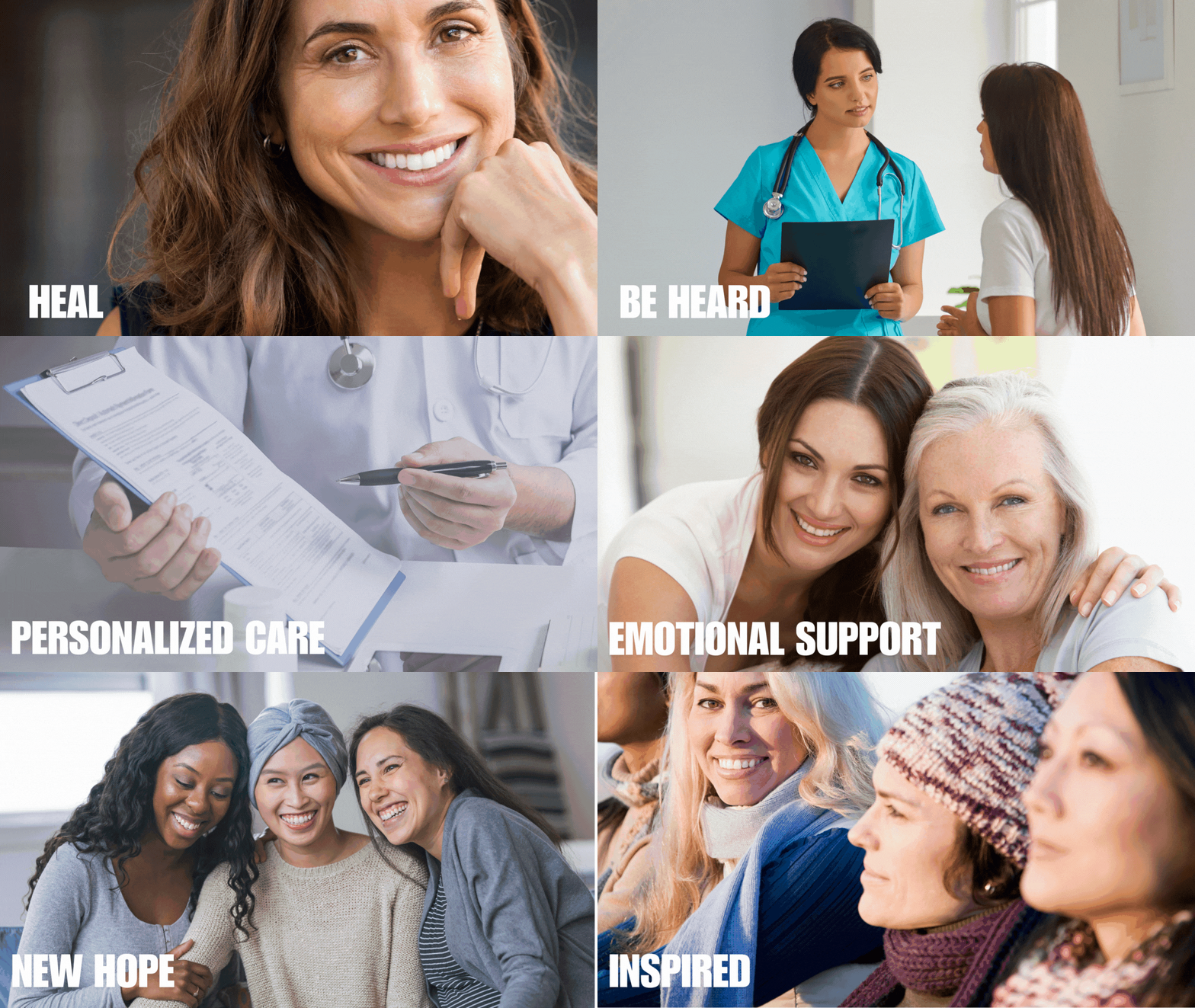
Breast Cancer Advanced Treatment
Hope for Metastatic Breast Cancer
A Glimmer of Hope from Clinical Scientific Evidence
If you’ve been diagnosed with Stage 3 breast cancer or Stage 4 metastatic breast cancer, it’s normal to feel overwhelmed—especially if treatments like chemotherapy or hormone blockers haven’t given you the results you hoped for. At CMN Hospital, we want you to know that there are still scientifically-supported options available that don’t just target the disease but help preserve your immune system’s natural strength.
Understanding Autologous BMT (Bone Marrow Stem Cell Therapy)
Unlike allogenic transplants, which use stem cells from a donor, autologous stem cell therapy uses the patient’s own cancer-free bone marrow stem cells. This makes it 100% compatible and reduces the risks of rejection or complications. At CMN Hospital, Dr. Payan ensures that the bone marrow is thoroughly tested to confirm there are no cancer cells present before the transplant.
There is Hope Beyond Standard Treatments
At CMN Hospital, we know that every breast cancer case is unique. If you’ve exhausted chemotherapy and hormone blockers, you still have choices. Our advanced, scientifically-supported therapies offer renewed hope for patients with Stage 3 and Stage 4 metastatic breast cancer, as well as other metastatic cancers.
READ YOUR FREE
ADVANCED BREAST CANCER
TREATMENT GUIDE BELOW

Cancer Support

Although cancer can bring up isolating feelings, you are NEVER alone. You have far more support than you realize, even more support than you may know how to deal with! This blog discusses your cancer support community – people you already know and some that you are going to meet – and how to make the best of the support they are going to offer.
Existing Support System
Recognize that you already have a support system around you that is ready to be there for you as you embark on your cancer journey. This can include your family, friends, neighbors, co-workers, and others. Most likely, they are going to be there for you unconditionally and do whatever you may ask. This may include getting groceries, listening to you vent, spending a day together relaxing, or treating you like ‘good old you,’ not a person who has been diagnosed with cancer. This is important: they can help you retain your true identity through this time of change; to them, you are their loved one battling cancer, not a cancer patient. They will help you stay balanced, calm, and confident and provide you with love; they will also help you practice love, as you will love them in return.
Don’t be afraid to include children in your support system! Your first instinct may be to protect them, but they can play a very important role, and kids love to feel important. Laughter is truly the best medicine, and the carefree nature of children is infectious. So, while you may be inclined to limit your time with children, especially those that might not be old enough to comprehend the situation, recognize that they have a valuable role to play in your journey and would love to help you. To learn more about the science of laughter as a medicine, click here.
It may be important to set new boundaries with your existing support system as you embark on your cancer journey. Maybe you won’t want to discuss your cancer at all, and just want things to “stay the same” and that is totally okay; make sure that they are aware of it and that it isn’t because you are hiding something, but rather you want your relationship to remain the way it is. Conversely, maybe you are open and honest about your journey, but want to make sure consideration is placed into how things are phrased. There is power in positivity, so don’t be afraid to ask a friend to remain uplifting; taking the time to rearrange the words in a sentence, or how the sentence is said (tone and volume are crucial!) can make a world of difference during this time. You may have a friend that is so genuinely concerned about you, that they forget to talk about anything outside of your cancer journey; don’t hesitate to speak up! At the end of the day, your support system wants to do exactly that – support you– and you can help make sure that they are doing that in the best way possible.
Building a Cancer Community
There is also a cancer community waiting for you that you haven’t met yet: the online community. You probably already rely on the internet for cancer research – new treatments, questions you may have, or ways in which you can help yourself – but there are also ways in which you can get involved with other people like you, and other survivors, that you may not realize. A simple Google search can utilize countless communities – general survivors, specific cancers, gender based communities, the list goes on. Feel free to get test out a few until you find some that you connect with. However, remember to practice general safety rules: do not share personal or sensitive information, such as your full name, your address, or doctor’s name. This information is forever, and you can never be too careful.
Your doctors, the hospital staff, and other patients in the hospital are also part of your community; you see most, if not all, on a daily basis and know them on an intimate level. Your medical team works with you constantly, and they can provide you support unlike any others; they can offer medical expertise and help you to make the best decisions possible. Reject the misconception that the patient-doctor relationship is formal; you can rely on them for mental and emotional support as well. You are a multidimensional human being, and your doctors can help you on each level: mental, emotional, and physical.
Final Thoughts
Your cancer support community is a crucial part of your cancer journey: they will be there for you every step of the way, and even aid in making you feel better whether it is through laughter or support during your emotional healing therapies. Even though you may feel uncomfortable reaching out at first, don’t hesitate to reach out for your support system; people tend to find value in being valued so you are helping them at the same time. To learn more about the cancer support community available at CMN Hospital, click here or email us at info@cmnact.com. You can also learn about our doctors here.

Medical Tourism

One question we are often asked by prospective patients is, “Why are you located in Mexico?” There are multiple reasons for this, often as many as there are reasons for why someone might be asking. Perhaps they are concerned about their ability to travel, especially in regards to their immune system's ability to fight off illness while on the go; maybe they don’t want to leave their families. Regardless, we want to address how traveling for medical care is not new: this trend has been on the rise for years, and the reasons behind this are extremely compelling.
Why travel abroad for medical treatment?
First, it is important to note that medical tourism, also known as destination medicine, “can best be defined as cross-border travel for the primary purpose of securing treatment. The term may suggest carefree holidaymakers, but … many medical tourists are engaged in a uniquely modern form of rebellion, asserting an individual’s independence from the persistence of political geography.”[1]
Prospective patients, particularly women, are choosing to take control of your medical care by proactively seeking the proper care they deserve and demand – even if certain procedures are not performed in the United States.
The reasons for why people choose to engage in medical tourism are bountiful, and often slightly different per individual based on personal preference. Some find the treatment to be cheaper, while others “face a long wait at home, or the treatment they want is not available in their own country.”[2] Each of our patients have different reasons for coming to CMN (located in Mexico) for their cancer treatment.
Because medical tourism is still growing, prospective patients may be the first in their inner circle to leave their country for treatment. This is normal, and Rajesh Rao, CEO of IndUSHealth found that the reasoning behind it is that “We’re so used to the adage that you get what you pay for, it takes a little thinking outside of the box… by just going outside, you end up getting a lot better quality and a lot better care for a lower cost. Until you actually see it, it’s hard to believe.” [3]
Statistics and Rankings
Patients Beyond Borders conducted a study to explore medical tourism; they recognize that although “medical tourism still in its early stages, [and] gaining reliable data is challenging,” their research and editorial team worked diligently to “compile the most accurate, current information on international medical travel, global healthcare, and the international patient experience.”[4] They found that Mexico was among the top destinations; “the making of a world-class healthcare destination is complex,” and they used the following criteria to compose their list of top destinations:
Government and private sector investment in healthcare infrastructure
Demonstrable commitment to international accreditation, quality assurance, and transparency of outcomes
International patient flow
Potential for cost savings on medical procedures
Political transparency and social stability
Excellent tourism infrastructure
Sustained reputation for clinical excellence
History of healthcare innovation and achievement
Successful adoption of best practices and state-of-the-art medical technology
Availability of internationally-trained, experienced medical staff
Further, they found that procedures and treatment in Mexico were relatively less than those offered in the United States, averaging “40-65%”cheaper overall.
A separate, non-related survey conducted by Medical Tourismfound that “almost 85% of U.S. patients found they received more personalized medical care than in the U.S;” further, “almost 86% of U.S. patients said they would travel again overseas for medical care.”[5]
We hope that these statistics help give quantitative insight into the field of medical tourism; however, the quality of your treatment should always be the primary factor in deciding to engage in medical tourism.
Traveling to CMN: How we factor into medical tourism
CMN Hospital is proud of how we are able to serve others, and part of our exceptional and compassionate care is due to the fact that we are located in San Luis, Sonora, Mexico. Mexico is frequently mentioned during the conversation of medical tourism, partially because our country “has both a universal health-care system and private health care. The public system, known as IMSS (Instituto Mexicano del Seguro Social), has clinics, hospitals, and pharmacies all over the country. Expats with a valid residence visa can sign up for it—and many do,” meaning that we are able to provide care for those located internationally – and we frequently do.
Further, “Mexican hospitals are modern, well-equipped…and much less expensive than their U.S. counterparts,” and CMN is no different; we constantly strives to have state-of-the-art equipment, programs, and treatment plans that will best serve the needs and desires of our patients.
Want to come to CMN? Here’s how:
CMN Hospital is located in Mexico, 16 blocks from the border. We wrote this blog to help all readers, especially those that are considering coming to our hospital for treatment, explore the topic of medical tourism. CMN Hospital is all about compassionate care that extends far beyond your hospital stay; we want you to feel at ease traveling to and from our hospital, and to know that your health is our ultimate priority. To contact us about coming to CMN, you can email us at info@cmnact.com or contact us here.
References
[1]Issenberg, Sasha. “The Astonishing New World of Medical Tourism.” Huffington Post.2016.
[2]Sheahan, Maria and Kröner, Andreas. “Medical Tourism Industry Holds Major Growth Potential.” Huffington Post. 2013.
[3]Akitunde, Anthonia. “Medical Tourism: Why More Boomers Are Going Abroad For Treatment.” Huffington Post.2012.
[4]“Medical Tourism Statistics & Facts.” Patients Beyond Borders.
[5]“Facts & Statistics.” Medical Tourism.
Attitudes and Cancer

Once you receive a cancer diagnosis, one of the most important first steps to take is to digest it emotionally. Cancer affects not only your body but your emotions and mental outlook. However, this is not to your detriment, as you can control your feelings and thoughts. Coming to terms with your illness and developing a strong, positive mental armor to protect you throughout the cancer journey will be extremely helpful.
Control What You Can
Cancer can be overwhelming, especially if you feel you are not in control of much. However, if you take a moment to think of what you have true control over, you might be surprised at how long the list becomes. You control how you think, what you feel, how you want to communicate, and how you spend your time when you are not receiving treatment. That’s a lot; the list will only grow as you spend more time brainstorming!
Focusing on what you can control greatly impacts your overall attitude because it helps reinforce your power: you are in charge of your complete self, including how you mentally and emotionally to physical obstacles. Engaging your willpower, “the ability to resist short-term gratification in pursuit of long-term goals or objectives,” to focus on remaining positive and the areas of life that you can control will increase your overall mental strength and help you to take charge of how you think about and respond to your cancer battle.[1]
Positivity
Positivity is not just a good practice to make into a habit – it is scientifically proven to improve your overall life quality. Research has revealed that “when you are experiencing positive emotions like joy, contentment, and love, you will see more possibilities in your life. These findings were among the first that suggested positive emotions broaden your sense of possibility and open your mind up to more options.”[2] Further, studies have shown that “positive emotions provide an enhanced ability to build skills and develop resources for use later in life… [known] as the ‘broaden and build’ theory.” This theory entails that “positive emotions broaden your sense of possibilities and open your mind, which in turn allows you to build new skills and resources that can provide value in other areas of your life.”
Therefore, it is important to adopt a positive attitude, as it is not as ‘just feel happy all the time’ as it seems. Rather, developing a positive attitude takes time, practice, and mindfulness; it means taking whatever situation may come your way and learning how to see and make the best of it, even if you are naturally inclined to do the opposite.
Getting Support
As important as it is to be positive, expressing all of your emotions without feeling as though you are being held back is even more important. This is where it is important to have a loving support system that is there for you unconditionally. Katherine Puckett, PhD, has observed that, “so often I have heard a loved one say to a cancer patient who is crying, ‘Stop crying. You know you have to be positive... However, when we make space for people to express all of their feelings, rather than bottling them up inside, it is then easier for them to be optimistic. It is OK to allow tears to flow — these can be a healthy release.”[3]
Having a support system of loved ones - which can include family, friends, co-workers, online communities, or other friendly faces you can rely on – that you can rely on is essential. They help you maintain your positive outlook and express all of your emotions fully. They are a listening ear for you, a shoulder to cry on, and a source of hope and love; they help you be your best as you progress on your cancer journey.
For More Information
CMN firmly believes in a comprehensive treatment plan, meaning we utilize treatments that address and treat your physical, mental, and emotional health; plans are customized to fit you and your unique situation. To learn more about some of the treatments we offer, click here. Contact our medical team here; we look forward to assisting you!

References
[1]“What You Need to Know about Willpower: The Psychological Science of Self-Control.” American Psychological Association.
[2]Clear, James. “The Science of Positive Thinking: How Positive Thoughts Build Your Skills, Boost Your Health, and Improve Your Work.” The Huffington Post. 2013.
[3]“Fischer, Kristen. “Can a positive attitude cure cancer?” Healthline. 2016

Laughter the Best Medicine

Cancer is not funny; neither is any other medical illness, regardless of the severity. Oftentimes, when one is diagnosed with cancer, they are suddenly ridden with fear, anxiety, and nervousness regarding the battle ahead. The first plan of action that may come to mind is chemotherapy. However, as discussed throughout other blog posts, cancer treatment is not a one-size-fits-all, and rare is the treatment plan that does not include a variety of therapies.
One of the most vital treatments is commonly referred to as humor therapy, and it involves lots of laughter and light-hearted conversation.
Humor-globin?
While humor-globin, a play on the medical term ‘hemoglobin,’ does not actually exist, humor therapy does. This is a complementary therapy used in conjunction with other medically-rooted therapies and treatments, such as ultraviolet blood irradiation or ozone blood therapy.
The goals of laughter therapy include:
Boost mood
Encourage relaxation
Reduce stress
Improve the quality of life
A look at science reveals how these goals are attainable, and how they can truly affect cancer patients as they battle their illnesses.
The Science Behind It
Laughter is a unique therapy in that it addresses all aspects of wellness: the physical, emotional, and mental components.
Physically, endorphins are released during laugh sessions; endorphins are important as they are “the body’s natural energy booster, a natural painkiller, [and] a natural mood enhancer.”[1] Laughter reduces stress, and “the less stressed people are, the better the immune system is at fighting illness. Laughter also sends oxygen to the brain, which can enhance creativity, increase blood flow and even help us stay awake.”
For example, “one study did find that laughter can actually improve immune function, which is important for cancer patients battling the disease and trying to heal their bodies during cancer treatment. Stress is a definite detriment to physical and mental health, and lots of laughter is a great way to combat it.”[2]
How Humor Therapy is Practiced
Laughter therapy can be administered in several ways, natural or otherwise. For example, laughter and comedy is highly encouraged between a patient and their loved ones and visitors; if a family member visiting can remind you of a funny memory from years ago that triggers laughter, this engages you in positive thoughts and happier times, taking your mind off of what negativity may surround you. Positivity is contagious, and this brief fit of laughter can help carry a positive outlook to other facets of the cancer battle, such as believing that you will get better, or treatment will be administered successfully with little pain or side effects.[3]
Other hospitals may enlist in the aid of ‘comedy carts,’ which “are brightly decorated rolling carts that are filled with toys and games. Staff and volunteers travel the hospital floors to make bedside visits to patients to bring cheer and inspire laughter,” thus bringing the therapy to you directly.
Humor therapy is also practiced through more formal or structured situations, referred to as “laughter therapy classes that are akin to exercises classes. During these group sessions, patients and their families play a game like "Simon Says" and make laughing sounds that the instructor calls out. As the participant does the laughter exercises, the brain releases endorphins.”[4]
The Bottom Line
Laughter may not medically rid your body of cancer, nor will it cure it completely, but laughter is a powerful medicine that can drastically change your outlook and mental attitude. Laughter is an unofficial medicine that you have complete control over; you control how often you utilize it and whom you use it with. It’s a great way to lean on your loved ones, and to include them in your battle – even younger children can feel as though they are playing a key role in supporting you and helping you to feel your best.
With all of the benefits as discussed above, it’s no wonder why we often hear people say, “laughter is the best medicine.”

References

Significance of Listening

Listening is almost like our heartbeat, a constant skill we do without thought and often neglect the significance. We may occasionally have to ask someone, “are you listening to me?!” during an important conversation, but how often do we reflect on how well we are listening to what someone else has to say? Taking the time to engage our listening skills, and learn how to do them better, is a great way to improve. Reading this blog and implementing the tips provided may not take much of your time, but the impacts can be tremendous – both for you and the people you communicate with.
The Science Behind Active Listening
Listening is one of the most important skills we can learn and utilize in life: communication is vital, and your ability to help others converse with you is priceless. Unfortunately, listening seems to be taking a backseat as of late, as “a 2006 study of college students showed they spent about 24% of their time listening to others face to face or in groups, down from 53% in 1980, when a comparable study was conducted, says Laura Janusik, an associate professor of communication at Rockhurst University, in Kansas City, Mo.”
However, listening is crucial to living a fulfilled life; science proves this. One study was extremely telling: “test takers were asked to sit through a ten-minute oral presentation and, later, to describe its content. Half of the adults can’t do it even moments after the talk, and forty-eight hours later, 75 percent of listeners can’t recall the subject matter.”[1]So, where is the disconnect? It all comes down to brain matter. “The human brain can digest as much as 400 words per minute of information. But even a speaker from New York City talks at around 125 words per minute. That means three-quarters of your brain could be doing something else while someone speaks to you.”
Psychology researcher John Stewart, author of U&Me: Communicating in Moments That Matter and other seminal texts on interpersonal communication, found that “Genuine listening requires humility and curiosity—and neither can be successfully faked.”[2] His findings are mirrored by another professional, Philip Tirpak, who is an instructor of communication studies at Northern Virginia Community College and president of the International Listening Association. 2 As such, you can work to combat this and improve your ability to listen, comprehend, and retain information through a practice known as mindful listening. This isn’t special so much as it is purposeful: mindful listening requires you to focus on listening actively rather than passively. Listening is a multi-dimensional action: it requires you to rely on more of your senses as you listen with your eyes, not just your ears.
How to Listen
A common misconception is that listening occurs while the other person is talking. This isn’t necessarily the whole truth; rather, mindful listening is a conscious action that benefits from a little preparation.
Here are some listening tips to consider before the conversation:
Clear your mind: let go of any distractions or lingering thoughts. Making “task lists you can easily pick up again later” might be helpful if you are especially busy.
If this conversation holds a specific purpose, such as a doctor’s visit, “make a list of questions or topics you want to cover” so that you don’t forget anything.3
Open yourself up, and promise to be receptive: let go of assumptions regarding what “you think the other person will say.”3
Eliminate, or at least limit, distractions: put your phone on silent, turn off the T.V., or turn down the car radio.
Remember, the key to listening is being mindful and aware. Rather than focusing on the task of listening, think of it more as opening yourself completely to the other person and the conversation; be present and limit your ability to be distracted by disturbances, focusing on what the other person is saying, how they are saying it, and why they are saying it. You are now listening with a purpose: not to gather enough information to respond appropriately, but listening to comprehend what the other person and what they’re trying to communicate with you. You are also listening to their body language and how their tone or posture changes based on what they are saying. Included below are some helpful tips on listening to keep in mind during your discussion.
Throughout the conversation:
Engage with your body language: make eye contact, and face the person you are talking to. Try not to fidget, especially with your phone or other distracting devices.
Relax: there is a balance between being engaged and looking rigid. You want your body language to show you are present and focused on what the other person is saying, but you want to ensure you are doing so comfortably. Don’t be afraid to smile or even look away occasionally. Moderation is key: it’s what differentiates engaging eye contact from staring.
Make sure you’re getting the right information: ask questions if you don’t understand, or paraphrase what the speaker said back to them. This is especially helpful to redirect the conversation to a more positive place or avoid misunderstandings.
This works in two ways: don’t be afraid to repeat yourself if you feel you are being misunderstood. This reflects your ability to listen because when you are listening attentively and purposefully, you have a stronger sense of how you communicate with each other.
Be reactive: good listening involves absorbing a lot of information, and great listening reacts to the information you are being given. By this, take note of the other speaker’s body language and facial expressions. These nonverbal cues are priceless: how often do misunderstandings occur over text or email when nonverbal cues are absent? Take advantage of them, as they help paint the whole picture of the conversation. Their cues may reveal if you need to explain something further, change your tone, or engage the other person more (as in, don’t talk so much they become disengaged! Speaking of…)
Don’t be afraid to pause! “Awkward silences” are only as awkward as you let them be, and they are usually far more positive and purposeful than you think. These are quick and painless ways to transition to the next speaker, especially if someone feels they are not given enough time to talk or respond. They also give each person a second to stop, reflect, and then absorb and comprehend the information being communicated.
Please keep an open mind: sometimes difficult or carefree conversations occur, but they are still important. Mindful listening means trying to see the other person’s point of view, even if you don’t necessarily agree with it. Take the time to put yourself in their shoes by comprehending what they tell you; don’t close yourself off to certain details or anecdotes. You can disagree later, but your goal is to listen for comprehension while they are speaking.
The Bottom Line
Listening is fundamental to communication – whether the conversation is simple or complex. To successfully engage with another person, we must listen and comprehend what the other is saying. We hope that these skills help you improve your ability to listen and help the other people in your life see how much you care for and enjoy engaging with them.
To further enhance your communication skills, you can learn how to better communicate with your doctor here. If you want to communicate with someone regarding obtaining alternative cancer treatment, we at CMN are happy to serve you. You can email us at info@cmnact.com or click here for other ways to contact us at your convenience.

References
[1]Sullivan, Bob and Hugh Thompson. “Now Hear This! Most People Stink at Listening [Excerpt]. Scientific American. 2013.
[2]Sea Gold, Sunny. “How to be a better listener.” Scientific American. 2015.
[3]Shellenbarger, Sue. “Tuning In: Improving Your Listening Skills.” The Wall Street Journal. 2014.
[4]“10 Steps to Effective Listening.” WomensMedia, Forbes. 2012.

Science of Forgiveness

Cancer treatments focus on the physical components: therapies meant to attack the disease head-on, diffuse side effects, and boost your immune system. However, it is important to also focus on the mental and emotional aspects of the cancer battle. Therapies like laughter therapy are arguably as important to a patient’s well-being as hyperbaric oxygen therapy. This is because cancer needs to be attacked from all angles, including your mental and emotional ability to be resilient, focused, and empowered, not just your body’s physical ability to fight the disease.
When you are diagnosed with cancer, you face a lot of change. Your daily schedule changes, your habits change, and your priorities change. However, the people around you may also change, and one skill that may help you adapt is the ability to forgive. For example, scientific“studies have found that forgiveness can reap huge rewards for your health, lowering the risk of heart attack; improving cholesterol levels and sleep; and reducing pain, blood pressure, and anxiety, depression, and stress.”[1]
Therefore, forgiveness is a skill that can provide tremendous value to you on your cancer journey: it can assist in making peace with others and your past, present, and future.
Forgiveness in Practice: A Scientific Perspective
It is important to note that forgiveness is an action; that is, it is much larger than the phrase “I’m sorry” and as such, has grander results that affect you and the situation in a positive way.
Karen Swartz, director of the Mood Disorders Adult Consultation Clinic at The Johns Hopkins Hospital, found that forgiveness “is an active process in which you consciously decide to let go of negative feelings whether the person deserves it or not… As you release the anger, resentment, and hostility, you begin to feel empathy, compassion, and sometimes even affection for the person who wronged you.”
A 1998 study conducted at Stanford University as part of the Stanford Forgiveness Project:
“demonstrated that normal college students could become significantly less angry and hurt, feel more hopeful, spiritually content, and self-efficacious about managing their emotions, and more forgiving after a six-hour training session. Moreover, the psychosocial gains were stable over a 10-week follow-up period.”
This is significant because forgiveness can directly affect you and your cancer journey in a positive way, as it has been scientifically found to be “beneficial for physical health [in] that it deepens and promotes interpersonal relationships. Another possibility is that forgiveness is a form of religious expression or may indicate a positive spiritual experience. Many studies attest to the beneficial effect that positive relationships and good social ties have on indices of physical health.” You can mirror these results in your life as you begin practicing forgiveness.
Tips for Forgiveness
One of the most critical components of a cancer patient’s journey is that they have a solid support system to lean on throughout the way. However, no one is perfect, so it is important to practice and develop forgiveness whenever necessary. Forgiveness can occur through various avenues, from an emotionally- deep verbal conversation to a simple note left on the bed. Nevertheless, “research has suggested they all have 3 common components: [2]
Gaining a more balanced view of the offender and the event
Decreasing negative feelings towards the offender and potentially increasing compassion
Giving up the right to punish the offender further or to demand restitution
Forgiveness is a process that often takes time. While after reading this blog, you may feel as though you must immediately forgive someone who wrongs you to move on; this is not true: “we don't want to deny ourselves the right and the opportunity to feel the feelings of hurt and betrayal. We can only work through that which we first acknowledge.” As such, “forgiveness can involve drawing boundaries for yourself and simply figuring out what that boundary is. The biggest aspect will involve the betrayal's impact on your life… You cannot get to a place of acceptance without going through these hard parts. This can involve understanding the factors contributing to the betrayal and coping with what that means for a future relationship.”
You can practice forgiveness directly with the other party involved through open communication, or you can practice forgiveness individually and introspectively. By this, you can write a note to the person who wronged you, explaining what hurt and why things went wrong, and then store or throw the letter away: you do not have to send it. This is part of the beauty and power of forgiveness: you are in control of how you forgive, when you forgive, and why you choose to forgive. The important part is that you do so when you are ready to, thus making peace with the situation and enabling your ability to move on fully.
Final Thoughts
Forgiveness may not medically rid your body of cancer, but it is a powerful medicine that can provide you with inner peace and strengthen your bonds with members of your cancer community and support system. Forgiveness is a unique medicine in that you have complete control over it: you control how often and whom you use it with, and you often feel the positive results immediately. It is a tool that assists you in “managing life's inevitable hurts and using forgiveness to make peace with the past,” and thus should be seen as a trait with incredible “psychosocial and physiological value.”[3]
