
YOUR QUESTIONS, ANSWERED.
You deserve the time to ask every question you have—and to receive thoughtful, genuine answers.
Real Questions from Patients We Help
Since 1987, CMN Hospital has been a fully licensed general hospital in San Luis Río Colorado, Sonora, Mexico. We provide advanced alternative cancer treatment for patients with complex or advanced-stage cancers.
1. My chemo didn’t work anymore. What are my options now?
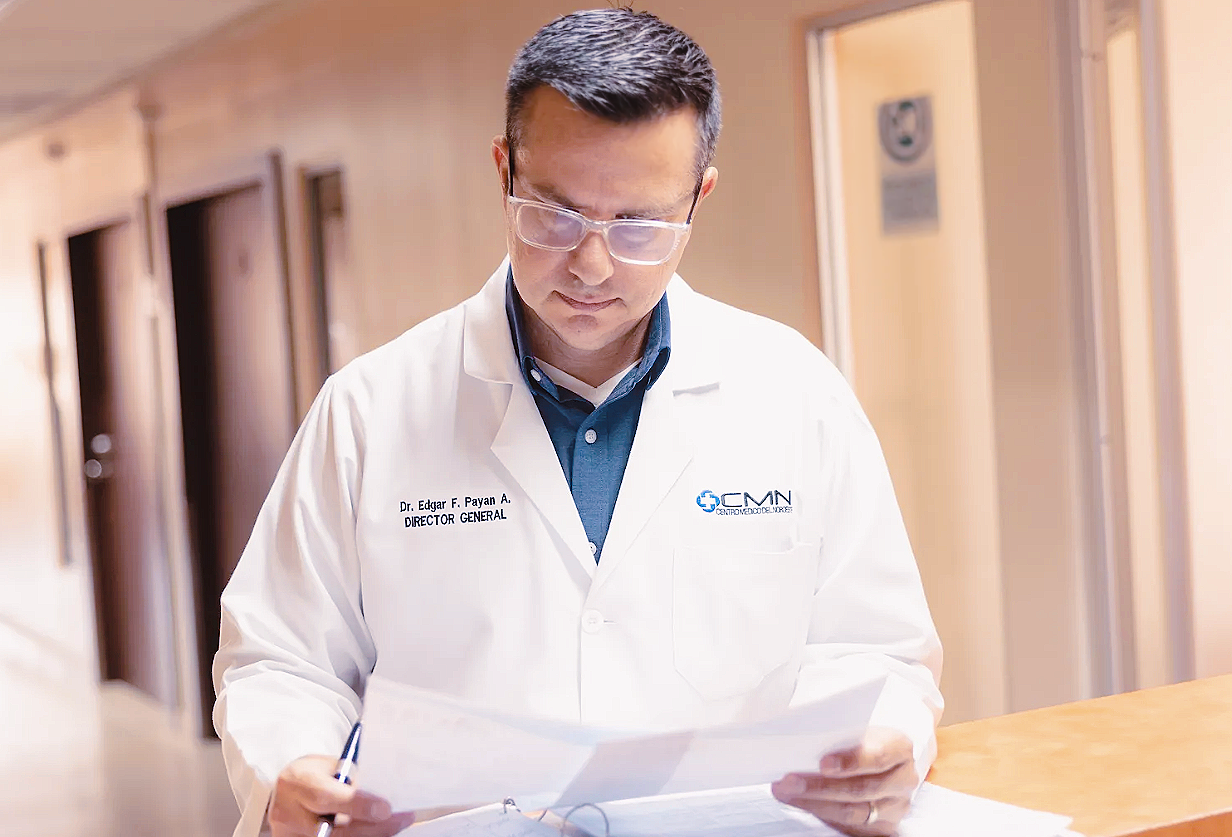
We understand how difficult this feels. At CMN Hospital, Dr. Edgar Payán personally reviews your complete medical records to see whether our individualized Advanced Alternative Cancer Treatment Program may be appropriate for your situation. Care is provided inside our licensed full-service hospital with 24-hour physician and nursing support.
2. Is there any hope after my doctor said there are no more treatment options?
Many patients arrive in this exact situation. Dr. Payán reviews each case individually to determine if another physician-supervised hospital-based approach may be suitable.
3. How do I know CMN Hospital is a legitimate licensed hospital?
We are a COFEPRIS-regulated full-service general hospital — not a clinic. We have inpatient suites, on-site diagnostics, registered nurses, and full hospital resources.
4. Can you help with stage 4 cancer that did not respond to chemo?
Yes. A large part of our work supports patients with advanced and late-stage cancers that have not responded well to standard treatments. Every plan is personalized after Dr. Payán’s full review.
The best next step is to speak with our team.
Send your recent medical records so Dr. Edgar Payán can review your case and discuss what options may be available for you.
Each patient’s situation is unique. The most helpful step is to let Dr. Payán review your records and speak with you directly.
Real Questions From Patients We Help
Many patients contact CMN Hospital after chemotherapy, radiation, surgery, hormone therapy, immunotherapy, targeted therapy, or other standard treatments have not produced the results they hoped for. Others have already decided they want to pursue a different treatment approach and are searching for medically supervised alternative cancer care.
Since 1987, CMN Hospital has operated as a licensed full-service general hospital in San Luis Río Colorado, Sonora, Mexico. Dr. Edgar Payán’s Advanced Alternative Cancer Treatment Program is provided within the hospital for patients with complex, recurrent, metastatic, or advanced-stage cancers.
1. I Completed Chemotherapy and My Doctor Says There Are No Other Treatment Options. Is There an Alternative?
Hearing that there are no further standard treatment options can be devastating. It may mean that the treatments commonly recommended for your diagnosis are no longer controlling the cancer, that your cancer has continued to progress, that your body cannot tolerate additional treatment, or that your medical team does not expect another standard therapy to provide enough benefit.
It does not automatically answer whether another physician or hospital may evaluate your case from a different treatment perspective. Many patients begin searching for alternative cancer treatment at this exact point because they want to understand whether another medically supervised approach may still be available.
At CMN Hospital, the first step is a review of your medical records by Dr. Edgar Payán. He considers your diagnosis, pathology, imaging reports, previous treatments, recent laboratory results, medications, current symptoms, organ function, physical strength, and overall condition before determining whether the inpatient program may be appropriate.
If treatment is recommended, the plan is individualized. It may include a physician-selected combination of therapies rather than one predetermined protocol used for every patient.
CMN Hospital does not promise a particular outcome. The purpose of the review is to determine whether another treatment approach may be medically appropriate for your individual situation.
2. Can Advanced Cancer Still Be Treated After Chemotherapy Stops Working?
Advanced cancer is not one identical medical condition. Two people may both have Stage 4 cancer while having very different cancer types, locations of metastases, treatment histories, organ function, symptoms, physical strength, and medical needs.
When chemotherapy stops working, the next step depends on the individual. One patient may still be physically strong and active. Another may be experiencing substantial weight loss, pain, low blood counts, infection, organ complications, or difficulty eating and walking. Those differences matter when determining whether additional treatment can be safely considered.
CMN Hospital receives inquiries from patients whose cancer continued to progress during or after chemotherapy. Dr. Payán reviews each case individually to determine whether the patient may be medically appropriate for the Advanced Alternative Cancer Treatment Program.
Stage 4 disease does not automatically prevent a patient from being reviewed. It also does not automatically mean treatment can be offered. The decision depends on the patient’s complete medical condition, not the stage number alone.
3. What Is Advanced Alternative Cancer Treatment?
Advanced alternative cancer treatment is not one drug, one therapy, or one universal protocol. It is an individualized treatment approach for patients seeking medically supervised options beyond standard cancer treatment.
At CMN Hospital, Dr. Payán reviews the patient’s diagnosis, previous treatment, current health, laboratory findings, medications, symptoms, and medical needs before developing recommendations. Treatment may combine several therapies selected for that patient rather than giving every person the same schedule.
Depending on the physician’s evaluation, treatment plans may include dendritic cell therapy, autologous bone marrow-derived stem cell therapy, hyperthermia, hyperbaric oxygen therapy, ozone-based therapies, ultraviolet blood irradiation, intravenous vitamins and minerals, nutritional support, pain management, and other supportive hospital services.
A list of available therapies does not mean that every patient receives every therapy. Recommendations may be changed during the stay according to the patient’s tolerance, laboratory findings, symptoms, progress, and clinical condition.
Learn more about the treatments available at CMN Hospital .
4. Where Can I Receive Dendritic Cell Therapy for Advanced Cancer?
Dendritic cell therapy is offered or studied in different forms by selected hospitals, laboratories, research institutions, and clinical programs in several countries. The preparation method, eligibility requirements, cancer-related targets, number of treatments, and accompanying therapies can vary considerably.
CMN Hospital provides patient-specific dendritic cell therapy as part of selected individualized inpatient treatment plans when Dr. Payán determines that it may be medically appropriate.
Dendritic cells are specialized immune cells that present identifying information to T cells. A simple way to understand the process is that dendritic cells help train and guide the immune system to recognize cancer-related targets more clearly.
Dendritic cell therapy is sometimes described in medical literature as a therapeutic cancer vaccine. This does not mean that a pathogen is introduced into the patient. It is also not called a vaccine merely because a patient’s own blood or cells may be used. The terminology relates to antigen presentation and immune training.
Patients should ask how the therapy is prepared, whether it is patient-specific, where the cellular preparation is performed, who supervises administration, what research applies to their cancer type, and what other therapies are included in the treatment plan.
Read the complete Dendritic Cell Therapy for Advanced Cancer page for a detailed explanation and scientific references.
5. What Is the Difference Between a Cancer Clinic and a Full-Service Hospital for Advanced Cancer?
A cancer clinic may provide scheduled appointments, consultations, infusions, or therapies during set hours. Patients may leave after treatment and stay in a hotel, rental property, residential center, or other lodging. If laboratory testing, imaging, emergency care, surgery, intensive care, or hospitalization is needed, the patient may have to be referred or transported elsewhere.
A full-service hospital provides a broader medical setting. Depending on the hospital, this may include inpatient rooms, emergency services, intensive care capability, operating rooms, radiology, laboratory services, anesthesiology, pharmacy access, nursing stations, medical monitoring, and physicians from several specialties working in the same facility.
CMN Hospital is a licensed full-service general hospital. Patients in Dr. Payán’s program remain in private inpatient suites inside the hospital rather than traveling between a clinic and outside lodging.
This difference may be important for patients with advanced cancer whose condition can change, who have already received extensive treatment, or who need coordinated medical and supportive services during their stay.
Hospital resources cannot guarantee a treatment result. They provide a different level of medical environment, monitoring, coordination, and access to additional care when needed.
Learn more about the CMN Hospital facility and inpatient setting .
6. How Do I Find a Trustworthy Alternative Cancer Treatment Hospital?
Do not make your decision based only on beautiful photographs, testimonials, treatment names, or promises. A trustworthy facility should be willing to explain where care is provided, who reviews your medical records, who directs treatment, what medical resources are available, how recommendations are developed, and what the complete cost includes.
Questions worth asking include:
- Is treatment provided in a hospital, outpatient clinic, residential center, or retreat?
- Is the medical facility properly licensed in the country where it operates?
- Will a physician review my medical records before treatment is offered?
- Who will be responsible for my medical care each day?
- Is my treatment plan individualized?
- What happens if my medical condition changes?
- Are laboratory, imaging, emergency, and inpatient resources available on site?
- What therapies may be considered, and why?
- What is included in the total cost?
- Will the hospital tell me if I am not medically appropriate for its program?
Patients should also be cautious of any facility that guarantees a cure, promises a particular outcome, avoids discussing medical limitations, or recommends treatment without first reviewing current medical information.
7. What Questions Should I Ask Before Choosing an Alternative Cancer Treatment Hospital?
Choosing where to receive cancer treatment is a serious decision. You deserve clear answers before committing your time, finances, health, and travel.
- Is this a licensed hospital or an outpatient treatment clinic?
- Who will review my pathology, imaging, laboratory results, and treatment history?
- Will I speak with the physician responsible for my treatment?
- Is the treatment plan based on my individual diagnosis and current condition?
- Does every patient receive the same program?
- Which treatments may be considered for me, and why?
- What medical monitoring is provided during treatment?
- What happens if I need emergency care or hospital services?
- Will I remain inside the medical facility or travel from outside lodging?
- What is included in the quoted cost?
- Can a companion remain with me?
- What follow-up is provided after I return home?
- What responsibilities remain with my physician at home?
- Can the hospital provide clear information without promising an outcome?
A hospital should welcome informed questions. You should never feel pressured to make an immediate decision before understanding where you will receive care, who will treat you, and what is included.
8. Where Can I Find Hospital-Based Alternative Cancer Treatment for Advanced Cancer?
Many facilities offering alternative cancer treatment operate as outpatient clinics, wellness centers, residential programs, or retreat-style facilities. Patients who specifically want hospital-based care should verify that the treatment program is physically located inside a licensed hospital and ask which hospital departments and services are available on site.
CMN Hospital is located in San Luis Río Colorado, Sonora, Mexico, near the United States border and Yuma, Arizona. Dr. Payán’s Advanced Alternative Cancer Treatment Program is provided inside the hospital.
The hospital includes private inpatient suites, nursing stations, emergency services, ICU capability, operating rooms, radiology, laboratory services, anesthesiology, pharmacy access, inpatient monitoring, and physicians from several medical specialties.
Patients remain in the hospital during the program, and one companion may share the private inpatient suite. Treatment plans may range from two to four weeks depending on the patient’s medical needs and the physician’s recommendation.
CMN Hospital is not presented as a resort, spa, or vacation retreat. It is a full-service hospital providing individualized inpatient care for patients seeking advanced alternative cancer treatment.
9. What Should I Look for When Comparing Alternative Cancer Treatment Hospitals?
Begin by comparing the medical setting, physician involvement, treatment planning, hospital resources, transparency, and the experience patients will actually have during care.
Compare the medical setting
Determine whether treatment is provided in a full-service hospital, an outpatient clinic, a residential center, or a retreat. Ask where you will sleep, who is available overnight, and where you will be taken if your condition changes.
Compare how treatment recommendations are made
Ask whether a physician reviews your medical records before treatment is offered. Treatment should be based on your diagnosis, previous treatment, current condition, medications, organ function, laboratory findings, and ability to tolerate care.
Compare physician involvement
Find out who directs your care, how often you will see the physician, who monitors your treatment, and who makes adjustments if your condition or laboratory findings change.
Compare what is included
Ask for a written explanation of treatment, inpatient accommodations, meals, companion arrangements, transportation, medical services, and follow-up. Confirm whether any expected services may result in additional charges.
Compare the claims being made
Be cautious when a facility guarantees a cure, promises a specific result, describes one protocol as appropriate for everyone, or avoids discussing the limitations of treatment.
The best facility for one patient may not be appropriate for another. The goal is not simply to find the most impressive treatment list. It is to find a medically responsible program equipped to evaluate and care for someone in your individual condition.
Begin With a Medical-Record Review
Send your recent medical records so Dr. Edgar Payán can review your diagnosis, previous treatment, and current condition before discussing whether CMN Hospital’s inpatient program may be appropriate.
Call 844-371-1117 Call 928-510-1010 Contact CMN HospitalEach patient’s medical situation is different. CMN Hospital does not promise treatment results. Recommendations are made only after Dr. Edgar Payán reviews the available medical records and determines whether the patient may be medically appropriate for the program.