
Healing Science Breakthroughs
Exploring New Paths to Cancer Recovery

Dendritic Cell Therapy CMN Hospital

Dendritic Cells: Advanced Cancer Treatment
Dendritic Cell Therapy with Dr. Edgar Payan
If you or a loved one is dealing with advanced cancer and have not found success with traditional treatments, it’s time to explore new and promising options. At CMN Hospital, Dr. Edgar Payan offers personalized cancer treatment protocols, including innovative therapies like dendritic cell therapy. These advanced protocols are specifically designed to treat stage 3 breast cancer, metastatic stage 4 breast cancer, and advanced prostate cancer.
The Importance of a Comprehensive Cancer Treatment Plan
Cancer treatment is not a one-size-fits-all solution. It requires a combination of approaches designed to target cancer cells, boost the immune system, and improve the patient’s overall strength. One critical factor that must be prioritized when developing a cancer treatment plan is the immune system. A strong immune system is essential for fighting illness and infection, and it plays a significant role in the body’s ability to fight cancer. Dendritic cells (DCs) are part of the body’s immune response, and they work to recognize and eliminate abnormal cancer cells.
Dendritic cell therapy is a leading-edge treatment that empowers the immune system to fight cancer while supporting overall health. This innovative therapy uses the patient’s own immune cells to specifically target and destroy cancer cells. It’s an excellent option for patients who are looking for advanced treatments that complement traditional methods.
How Dendritic Cell Therapy Works to Fight Cancer
Dendritic cells (DCs) are specialized immune cells that play a crucial role in the adaptive immune response. They act as messengers, identifying harmful cells like cancer and signaling the body’s immune system to attack. By activating T-cells, dendritic cells help create a powerful anti-tumor response, making them an important component of advanced cancer therapies.
At CMN Hospital, our team employs cutting-edge techniques to harness the power of dendritic cells. Our personalized approach to cancer treatment includes advanced therapies like dendritic cell vaccines, which have shown promising results in improving immune response and fighting cancer. Recent studies, such as those from institutions like the Fred Hutchinson Cancer Center, highlight the effectiveness of dendritic cell therapy in patients with advanced-stage cancers, such as multiple myeloma and breast cancer.
This therapy is not used in isolation but is integrated into a comprehensive treatment plan tailored to each patient’s unique needs. By combining dendritic cell therapy with other evidence-based cancer treatments, we offer a more complete and personalized approach to care.
At CMN Hospital, under the expert care of Dr. Edgar Payan, patients receive integrative cancer treatment that incorporates the latest advancements in immunotherapy. Dendritic cell therapy offers hope for patients who are facing advanced stages of cancer and are seeking new, scientifically backed treatment options.
To learn more about how Dr. Edgar Payan and the team at CMN Hospital can help you with advanced cancer treatment options, visit us online at cmnadvancedcancertreatment.com or call us at 1-844-371-1117. Take the next step in your cancer care journey.
Contact Us Today

Cancer Success Rates

CMN Hospital Advanced Cancer Treatment Success Rates
Success Rates: A Personalized Perspective
When patients and their families consider cancer treatment options, it’s natural to want clarity around success rates. It’s important to understand that success in cancer treatment is impacted by many factors. At CMN Hospital, we approach success with the belief that each patient’s health needs are unique, shaped by individual factors that influence how their body responds to therapy. For patients who have already undergone conventional treatments—such as chemotherapy, surgery, radiation, or trial drugs—it brings more health challenges.
Why Success is Unique to Each Patient
Success is not solely about whether a patient is "cured" but also involves improving quality of life, extending longevity, and providing healing in body, mind, and spirit. Below are some of the key factors that can affect outcomes:
Stage of Cancer: The stage at which cancer is diagnosed plays a crucial role in determining treatment success. Patients diagnosed at an earlier stage may have better outcomes, while those with late-stage or metastatic cancers may face more challenges in responding to treatment.
Type of Cancer: Different cancers respond to treatments in varying ways. Solid tumors versus blood cancers, for instance, may require entirely different treatment protocols, which influence outcomes.
Previous Treatments: Many patients come to CMN Hospital after undergoing aggressive conventional treatments, such as chemotherapy, radiation, or surgery. These interventions can weaken the immune system and the body's overall ability to heal. The lingering effects of these treatments, such as reduced blood cell counts or weakened organs, make recovery more complex and can affect how the body responds to further therapy.
Age and General Health: Younger patients generally have stronger immune systems and recover more easily, while older patients or those with pre-existing conditions (such as diabetes or heart disease) may face more difficulties.
Immune System Strength: Since many of the therapies at CMN Hospital focus on strengthening the immune system, the state of a patient’s immune health coming into treatment is a critical factor. Patients whose immune systems have been compromised by previous treatments may not respond as quickly or as robustly as those who are in better overall health.
Lab Monitoring Beyond Tumor Markers
One important part of monitoring success in treatment is regular lab tests. While many patients are familiar with tumor marker testing, lab work at CMN Hospital goes beyond this. We monitor hemoglobin (Hb) and albumin (ALB) levels, among others, to assess the body’s overall ability to recover.
Hemoglobin (Hb or Hgb): Chemotherapy can lower hemoglobin levels, affecting how well the body transports oxygen. In cases where levels are low, transfusions of platelets, plasma, or albumin may be required.
Albumin (ALB): This protein helps maintain proper fluid balance. Low albumin levels, which can result from chemotherapy, may indicate malnutrition, liver dysfunction, or healing difficulties. If needed, albumin transfusions can help restore balance and support recovery.
These variables and others help us understand how a patient’s body is responding to treatment and guide adjustments to the care plan as necessary.
The Importance of Starting Treatment Early
Timing can play a critical role in the effectiveness of cancer treatments. For patients who begin alternative therapies shortly after conventional treatments, the body often has more resources available for recovery. Early intervention allows us to help strengthen the immune system and restore natural healing mechanisms before they are further compromised by the disease or the lingering effects of chemotherapy and radiation. If there has been a delay in seeking cancer care, it is never too late to explore treatment options. At CMN Hospital, we are committed to providing compassionate and comprehensive care at every stage, regardless of when treatment begins. Our goal is to assess each patient’s current health status and create a personalized plan that works with their body’s needs, helping to improve quality of life and promote healing.
Success in Stage 4 and Post-Chemotherapy Patients
Many patients who come to us are in Stage 4 or have been through extensive conventional treatments. In these cases, success is often defined differently. Rather than focusing solely on "curing" the cancer, success may mean:
- Improved quality of life
- Extended time with loved ones
- Symptom management and relief
- Strengthening the body’s natural healing mechanisms
Patients who come to us after chemotherapy may find that recovery is slower because chemotherapy can impact the liver, kidneys, and other organs. The body’s ability to clear toxins is reduced, which can slow the response to new treatments.
For Family and Friends: Is It Worth it?
We often hear the heartfelt question: "Is it worth it?" This question comes with deep emotions, especially when supporting a loved one with advanced-stage cancer. It's completely natural to seek clarity regarding treatment options, particularly when financial considerations are involved. Answering this question is complex because it encompasses not just medical factors but also hope and individual values.
Respecting Patient Care and Ethical Considerations
At CMN Hospital, we prioritize the health and well-being of all patients. We understand the complexity of cancer care, especially for those facing advanced stages of the disease. Our commitment is to provide the best care possible for each individual, respecting their unique circumstances and previous medical experiences.
Once a patient is discharged from their oncologist, we can then thoroughly evaluate their condition, considering their ability to travel to us, the complexities of their cancer type, treatment history, and overall health while respecting the care they have already received. We will not encourage critical patients from international locations to travel in emergency situations, as it is vital for individuals to remain safely at home near their local hospital until they are healthy enough to make the journey.
Learn About Our Advanced Cancer Treatment Programs
Hyperthermia

If you want to speak with Dr. Payan at CMN Hospital please contact us.
Hyperthermia is, by definition, the condition of having a body temperature greatly above normal; it is not to be confused with hypothermia, known as having a body temperature below normal. The average body temperature for human beings is 98.6°F or 37°C. Body temperature is crucial in maintaining health because many of the vital life functions carried out within your body are “possible only between certain narrowly defined limits of temperature. Cold inhibits and excessive heat suspends them. Body heat is energy. It is employed not just in resisting cold, but also in accelerating cellular activities.”[1] Science classes in school often taught us that bad things happen when our homeostasis, including internal body temperature, is disrupted. However, this is not always true.
Can positive things happen to our body when heat and high temperatures are purposefully utilized in strategic ways? Yes.
Treating Cancer with Hyperthermia
Hyperthermia, or an elevated temperature, is used to treat cancer by damaging or destroying tumors using heat. Specifically, “during a hyperthermia treatment, the cancerous tumor is heated to a temperature between 40 and 45°C (104 -113° F) for a certain period of time. Since cancer cells can’t tolerate high temperatures as well as healthy cells, parts of the cancer cells can become damaged by the heat.”[2]
Hyperthermia is most frequently, and most reliably, performed through two methods:
Local Hyperthermia
Regional Hyperthermia
Both local and regional hyperthermia treatments are effective and beneficial to fighting cancer, as they each utilize high temperatures to “damage and kill cancer cells, usually with minimal injury to normal tissues. By killing cancer cells and damaging proteins and structures within cells, hyperthermia may shrink tumors.”[3]
It is important to note that “numerous clinical trials have studied hyperthermia in combination with radiation therapy and/or chemotherapy. These studies have focused on the treatment of many types of cancer, including sarcoma, melanoma, and cancers of the head and neck, brain, lung, esophagus, breast, bladder, rectum, liver, appendix, cervix, and peritoneal lining (mesothelioma). Many of these studies, but not all, have shown a significant reduction in tumor size when hyperthermia is combined with other treatments.”
Local Hyperthermia
Local hyperthermia treatment occurs when “very high temperatures are used to kill the cancer cells and destroy nearby blood vessels. In effect, this cooks the area that is exposed to the heat. And, as with cooking, the higher the temperature and duration of exposure, the greater the effect seen within tissues.”[4] During local hyperthermia treatments,“different types of energy may be used to apply heat, including microwave, radio-frequency, and ultrasound,” so the treatment is adjustable to your specific medical condition, with regard to your doctors’ discretion, as well as the location of the tumor.
For example, local hyperthermia may be applied externally, primarily to tumors that “are in or just below the skin. External applicators are positioned around or near the appropriate region, and energy is focused on the tumor to raise its temperature.”
Local hyperthermia can also be used to treat tumors within or near body cavities, as well as those that are deep within the body.
Regional Hyperthermia
Regional hyperthermia differs from local hyperthermia in that heat is applied to large areas of tissue, such as a limb, organ, or other body cavity or surface.
One “approach to regional hyperthermia is deep tissuehyperthermia. This treatment uses devices that are placed on the surface of the organ or body cavity and produce high energy waves directed at a certain area. These devices give off radiofrequency or microwave energy to heat the area being treated.”
Another way in which regional hyperthermia treatment is utilized is through “external applicators, [which] are positioned around the body cavity or organ to be treated, and microwave or radiofrequency energy is focused on the area to raise its temperature.”
Hyperthermia and You
Hyperthermia is an advanced treatment that requires the utmost attention to detail because the body is extremely sensitive to fluctuations in internal temperature, which can alter the homeostatic normality within the body. Hyperthermia treatment is also implemented in a range of techniques locally and regionally, thus making the treatment flexible to your specific medical circumstance as part of your overall treatment plan.
CMN Hospital proudly offers hyperthermia in conjunction with our other treatments; to learn more about other treatments offered click here and to learn more about our hyperthermia treatment, contact us here.
References
[1]“The Importance of Body Temperature.” Raw Food Explained.
[2]“Hyperthermia.” Cancer Treatment Centers of America.
[3]“Hyperthermia in Cancer Treatment.” National Cancer Institute.
[4]“Hyperthermia to Treat Cancer.” American Cancer Society.

Ultraviolet Blood Irradiation

Ultraviolet blood irradiation (abbreviated as UBI or UVB) is an “intravenous therapy that represents a safe, non-toxic, low cost and drug-free method of treating most blood-borne viruses and it offers hope to those who suffer from viral infections and related conditions,” such as cancer.[1] Dubbed ‘the cure that time forgot’ by the American Journal of Surgery, UBI was first used in the 1940s and 1950s to treat diseases including pneumonia. Its success led it to be used extensively to treat “tuberculosis, arthritis, asthma, and even poliomyelitis. "[2]
How Ultraviolet Blood Irradiation Works
UBI is a multi-process medical treatment that assists the immune system and rejuvenates blood properties. Furthermore, “it has also proven to increase oxygen flow to the tissues, causing vasodilation and microcirculation,” a benefit highly regarded in cancer treatments.
UBI, as explained by the Physicians UBI Awareness Center, is a simple process that produces major, effective results. In step-by-step explanation:
“blood is withdrawn from the patient’s arm using a butterfly needle, and then run through a device which exposes the blood to controlled ultraviolet rays. The patient’s blood is exposed to UV light, where smaller bacterial and viral cells are targeted; they absorb the majority of the photonic energy. The healthy cells remain intact while the disease cells are killed and become antigenic. An “autogenous vaccine,” meaning self-generated, is thus produced. This process is formally known as “induced secondary immune reactivation,” and the end result provides a new supercharged immune response, greater oxygenation, and a balancing of your system; this enriched blood is then re-directed back into the body via the same needle.” [3]
The science behind UBI is clear, exemplifying that “low and mild doses of UV kill microorganisms by damaging the DNA, while any DNA damage in host cells can be rapidly repaired by DNA repair enzymes.”
Ultraviolet blood irradiation is extremely beneficial to patients battling cancer because it strengthens the immune system and improves overall health. In addition, UBI has multiple therapeutic benefits, which can further assist in other cancer treatments simultaneously. These benefits include:
Destruction of fungal, viral, and bacterial growth
Improves circulation and decreases platelet aggregation
Improves circulation by dilating blood vessels
Improves the body’s ability to detoxify and inactivate or remove toxins
Activates cortisone-like molecules, sterols, into vitamin D
Restores the normal size and movement of fat elements
Following the advent of antibiotics, UBI declined in common usage; doctors turned to prescribing pills, which could be taken out of the hospital, arguably a more minimalist approach to curing disease to multi-day hospital stays. However, due to “the increasing incidence of antibiotic-resistant infections and a desire for more natural therapies, UBI is enjoying a type of rebirth” and becoming more highly requested and used in medical offices.
What can UBI treat?
Ultraviolet blood irradiation is unique in that it “invokes photolysis of proteins,” which plays “a role in antigens, launching the appropriate immune reactions in the organism of the patient.”[4] As such, UBI is used to treat a variety of illnesses and medical conditions, some of which include:
Viral infections
Hepatitis
Mononucleosis
Bacterial infections
Wound infections
Lymphadenitis
Septicemia
Furunculous and carunculous
Inflammatory process: thrombophlebitis, fibrositis, cholecystitis, pancreatitis
Diseases due to inadequate peripheral circulation
Varicose or diabetic ulcers
Peripheral atherosclerosis
Vascular headache
Non-healing wounds and delayed union fractures
Rheumatoid arthritis and other autoimmune diseases
How does CMN utilize Ultraviolet blood irradiation?
CMN Alternative Cancer Treatment has found UBI therapy to be immensely effective in treating patients with a wide variety of illnesses – especially those who are struggling with cancer. At CMN, our physicians can safely administer this form of therapy and use it as part of our comprehensive approach to patient treatment and wellness.
To learn more about how CMN utilizes this therapy, click here or to schedule a video consultation with Dr. Payan at CMN Hospital please contact us.
References
[1]Innovative Medicine. “Ultraviolet Blood Irradiation Therapy.”
[2]J Phototochem Photobiol B. “Ultraviolet blood irradiation: Is it time to remember ‘the cure that time forgot?”
[3]Physicians UBI Awareness Center. “What is BPT?”
[4]Dr. Levon Gasparyan. “Ultraviolet Blood Irradiation Therapy Method.”

Hyperbaric Oxygen Therapy

Oxygen is crucial to our health, and the circulation of oxygen to our body’s cells is imperative to ensure that life functions are carried out properly and efficiently. Our bodies are constantly dependent on oxygen, and this is still, if not more, true when we are battling cancer. The connection between oxygen and cancer is clear: “The link between oxygen and cancer is clear. In fact, an underlying cause of cancer is usually low cellular oxygenation levels.”[1] This is a crucial relationship to take note of because it serves as a reminder that oxygen needs to be emphasized and incorporated in cancer treatments.
We have previously discussed a different cancer treatment in which oxygen is the central component, known as blood ozone therapy (accessible here). Today, we are going to discuss another cancer treatment that integrates the healing power of oxygen: hyperbaric oxygen therapy.
How Hyperbaric Oxygen Therapy Works
Hyperbaric oxygen therapy (HBOT) is a medical treatment that can be traced back to the 1600s. In 1662, the first renowned chamber was built and operated by a British clergyman named Henshaw. He erected a structure titled, the Domicilium, that was used to treat a variety of conditions.”[2] The therapy continued to be revised and modernized, as they were then developed into hyperbaric chambers in the 1940s by the military. “In the 1950s, physicians first employed HBOT during heart and lung surgery, which led to its use for carbon monoxide poisoning in the 1960s. Since then, over 10,000 clinical trials and case studies have been completed for numerous other health-related applications with the vast majority of results reporting resounding success.”
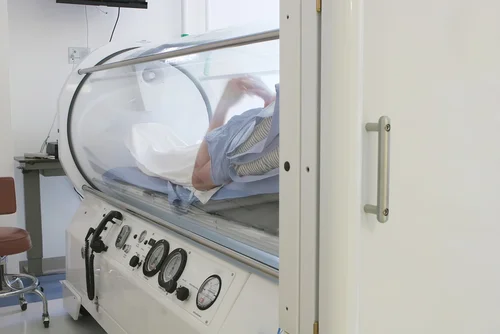
Hyperbaric therapy is frequently delivered through a chamber. “In a hyperbaric oxygen therapy chamber, the air pressure is increased to three times higher than normal air pressure. Under these conditions, your lungs can gather more oxygen than would be possible breathing pure oxygen at normal air pressure. Your blood carries this oxygen throughout your body. This helps fight bacteria and stimulate the release of substances called growth factors and stem cells, which promote healing.”[3]
In other words, hyperbaric oxygen therapy enriches your circulatory system with oxygen, where it is then delivered to tissues throughout the body. This flow then works in multiple ways. “Hyperbaric oxygen therapy:
Dissolves increased amounts of oxygen into the blood plasma.
Increases oxygen tension in hypoxic tissues.
Enhances white blood cell activity at the wound site.
Reduces edema by vasoconstriction.
Blocks cytotoxic effects of carbon monoxide and hypoxia associated with cyanide poisoning.
Accelerates formation of blood vessels (angiogenesis) and nerve endings in wounded tissue”[4]
The Benefits of Hyperbaric Oxygen Therapy
Hyperbaric oxygen therapy is extremely beneficial to the body back to health, as it “increases the dosage of oxygen and delivers more O2 to damaged areas in the body and stimulates the healing process.”[5] This therapy is also beneficial in that it:
assists healing by raising tissue oxygen levels to normal in areas where they are reduced through illness or injury.
encourages new blood vessels to grow and carry additional blood.
increases the ability of the body’s defense mechanisms to fight infection and kill bacteria.
helps reduce any swelling that may occur around the area.
Even more noteworthy, “20 sessions of hyperbaric therapy increases our stem cells eightfold!”
For More Information
Oxygen “is one of the most natural antibiotics and it controls over 8,000 genes,” thus explaining why oxygen-enriched therapies are so important in the fight against cancer.5Hyperbaric oxygen therapy is on the rise, and the prediction is that it will be integrated into more and more cancer treatments in the future. Dr. Jeffrey Niezgoda, president of the American College of Hyperbaric Medicine stated that “hyperbaric medicine is an incredibly powerful tool. It can be as helpful and therapeutic as a surgical scalpel in the right patient for the right indication. We’re seeing a rise in specialized wound and hyperbaric centers across the United States,” thus supporting its powerful ability to aid in cancer treatment, especially as an alternative medicine.[6]
CMN Alternative Cancer Treatment Hospital is a proud provider of hyperbaric oxygen therapy. To learn more about our comprehensive treatment plan or to schedule a video consultation with Dr. Payan at CMN Hospital please contact us.
References
[1]“Oxygen and Cancer.” Cancer Fighting Strategies.
[2]“The Science Behind Hyperbaric Therapy.” OxyHealth.
[3]“Hyperbaric Oxygen Therapy.” Mayo Clinic.
[4]“Hyperbaric Oxygen Therapy Fact Sheet.’ Kent Hospital.
[5]“Hyperbaric oxygen therapy for cancer patients.’ Natural Health 365.
[6]Olivero, Magaly. “Hospitals Tout Benefits of Hyperbaric Oxygen Therapy.”

What are Stem Cells?

Stem cells are fundamental components of every tissue and organ in your body. There are different types of stem cells, and they can originate from various places in the body; they are also formed at different times in our lives. Some of “these include embryonic stem cells that exist only at the earliest stages of development and various types of tissue-specific (or adult) stem cells that appear during fetal development and remain in our bodies throughout life.”[1]
Why are they important?
Stem cells have unique properties that make them extremely important. Specifically, stem cells hold the “remarkable potential to develop into many different cell types in the body during early life and growth. In addition, in many tissues they serve as a sort of internal repair system, dividing essentially without limit to replenish other cells.”[2] What this means is that “stem cells regularly divide to repair and replace worn out or damaged tissues,” thus working to maintain health and rejuvenation within the human body.
While stem cells are by nature unspecialized, they are also important because they can “give rise to specialized cells” via a process known as differentiation. [3] As such, a stem cell may start out in a universal context but can go “through several stages, becoming more specialized at each step,” thus taking on a more specific role in the body over time.
Stem Cells and Cancer Treatment
Stem cells are found throughout the body, but when used to treat cancer, there are 3 key sources [4] within the body. They are:
Bone marrow, from you or someone else
The bloodstream, from you or someone else
Umbilical cord blood from newborns
Stem cells are used for regenerative purposes in a treatment known as engraftment. During this process, stem cells are used via transplant, alone or in conjunction with other treatments, to “try to kill all the cancer cells. This treatment also kills the stem cells in the bone marrow. Soon after treatment, stem cells are given to replace those that were destroyed.” Stem cells are injected into the body intravenously, in a similar fashion to that of a “blood transfusion. Over time they settle in the bone marrow and begin to grow and make healthy blood cells.”
Future Potential of Stem Cells
As researchers continue to explore the properties of stem cells, major breakthroughs have the potential to occur. For example, stem cells “may soon become the basis for treating diseases such as Parkinson's disease, diabetes, heart failure, cerebral palsy, heart disease and host of other chronic ailments.” [5]
For More Information
The following video was taken from a TED-Ed lecture by Craig A. Kohn and features animation explaining what stem cells are and how powerful they can be in aiding the body’s healing.
For more information and resources provided during his lecture, click here or schedule a video consultation with Dr. Payan at CMN Hospital please contact us.
References