
Healing Science Breakthroughs
Exploring New Paths to Cancer Recovery

Advanced Breast Cancer Treatment at CMN Hospital

When Chemotherapy Fails for Breast Cancer
Receiving the news that chemotherapy is no longer working can feel overwhelming. Many women are left searching for other options, hoping for a treatment that doesn’t weaken their body further. At CMN Hospital, we offer scientifically supported therapies that focus on strengthening the immune system while targeting cancer at its source.
Scientific Evidence for Advanced Therapies
Studies continue to show the effectiveness of immune-supporting therapies for patients with breast cancer, particularly for those with Stage 3 and Stage 4 diagnoses. A study from Stanford University found that women with Stage 4 breast cancer who received autologous bone marrow stem cell therapy had a median survival of 60 months, compared to 28 months for those who did not receive treated cells. This research highlights the potential of stem cell-based therapies in improving long-term outcomes.
How Bone Marrow Stem Cell Therapy Works
Unlike traditional allogenic transplants, which rely on donor cells, autologous bone marrow stem cell therapy uses a patient’s own cancer-free stem cells. This method ensures complete compatibility, reducing risks of rejection or complications. At CMN Hospital, Dr. Edgar Payan and his team conduct rigorous testing to ensure that all harvested stem cells are free from cancer before reinfusion.
The collection process is minimally invasive and performed under sedation. A small sample of bone marrow is extracted, processed, and reintroduced into the patient’s system to help restore immune function. This therapy can be used alongside Dendritic Cell Therapy to enhance the body’s ability to detect and fight cancer cells.
Why Avoid High-Dose Chemotherapy?
High-dose chemotherapy can damage the body's blood-forming system, reducing red and white blood cell production and leaving patients vulnerable to infections, extreme fatigue, and other complications. Worse, cancer cells can sometimes hide during chemotherapy, increasing the risk of relapse even after intensive treatment.
Dr. Payan’s approach prioritizes therapies that enhance, rather than deplete, the immune system. By avoiding aggressive chemotherapy, his protocols help patients retain their body’s natural blood-forming and infection-fighting capabilities, providing a better quality of life during and after treatment.
Autologous Bone Marrow Stem Cell Therapy After Chemotherapy
For patients who have undergone chemotherapy or radiation therapy, autologous bone marrow stem cell therapy offers a way to help the body recover. These treatments, while effective in targeting cancer, often severely weaken the immune system. By reintroducing a patient’s own healthy stem cells, this therapy helps restore the body’s natural ability to regenerate blood cells, improving overall health and resilience.
Success and Safety of Autologous Bone Marrow Stem Cell Therapy
Extensive research has confirmed the safety and effectiveness of autologous bone marrow stem cell therapy. Studies from institutions such as the Memorial Sloan Kettering Cancer Center and Stanford University have shown that using a patient’s own stem cells significantly reduces the risks associated with donor transplants, including rejection and graft-versus-host disease.
Patients undergoing autologous bone marrow transplantation have reported improved survival rates and immune system recovery, particularly when this therapy is used after chemotherapy or radiation. Research published in the journal Nature highlighted that patients who received this treatment experienced better overall health and immune function.
There is Hope for Breast Cancer
At CMN Hospital, we recognize that each breast cancer case is unique. If you have been told that your options are limited or that chemotherapy is your only choice, we want you to know that additional scientifically supported therapies exist. Our advanced treatments provide renewed hope for patients with Stage 3 and Stage 4 metastatic breast cancer, as well as for those with other metastatic cancers.

Cancer Success Rates

CMN Hospital Advanced Cancer Treatment Success Rates
Success Rates: A Personalized Perspective
When patients and their families consider cancer treatment options, it’s natural to want clarity around success rates. It’s important to understand that success in cancer treatment is impacted by many factors. At CMN Hospital, we approach success with the belief that each patient’s health needs are unique, shaped by individual factors that influence how their body responds to therapy. For patients who have already undergone conventional treatments—such as chemotherapy, surgery, radiation, or trial drugs—it brings more health challenges.
Why Success is Unique to Each Patient
Success is not solely about whether a patient is "cured" but also involves improving quality of life, extending longevity, and providing healing in body, mind, and spirit. Below are some of the key factors that can affect outcomes:
Stage of Cancer: The stage at which cancer is diagnosed plays a crucial role in determining treatment success. Patients diagnosed at an earlier stage may have better outcomes, while those with late-stage or metastatic cancers may face more challenges in responding to treatment.
Type of Cancer: Different cancers respond to treatments in varying ways. Solid tumors versus blood cancers, for instance, may require entirely different treatment protocols, which influence outcomes.
Previous Treatments: Many patients come to CMN Hospital after undergoing aggressive conventional treatments, such as chemotherapy, radiation, or surgery. These interventions can weaken the immune system and the body's overall ability to heal. The lingering effects of these treatments, such as reduced blood cell counts or weakened organs, make recovery more complex and can affect how the body responds to further therapy.
Age and General Health: Younger patients generally have stronger immune systems and recover more easily, while older patients or those with pre-existing conditions (such as diabetes or heart disease) may face more difficulties.
Immune System Strength: Since many of the therapies at CMN Hospital focus on strengthening the immune system, the state of a patient’s immune health coming into treatment is a critical factor. Patients whose immune systems have been compromised by previous treatments may not respond as quickly or as robustly as those who are in better overall health.
Lab Monitoring Beyond Tumor Markers
One important part of monitoring success in treatment is regular lab tests. While many patients are familiar with tumor marker testing, lab work at CMN Hospital goes beyond this. We monitor hemoglobin (Hb) and albumin (ALB) levels, among others, to assess the body’s overall ability to recover.
Hemoglobin (Hb or Hgb): Chemotherapy can lower hemoglobin levels, affecting how well the body transports oxygen. In cases where levels are low, transfusions of platelets, plasma, or albumin may be required.
Albumin (ALB): This protein helps maintain proper fluid balance. Low albumin levels, which can result from chemotherapy, may indicate malnutrition, liver dysfunction, or healing difficulties. If needed, albumin transfusions can help restore balance and support recovery.
These variables and others help us understand how a patient’s body is responding to treatment and guide adjustments to the care plan as necessary.
The Importance of Starting Treatment Early
Timing can play a critical role in the effectiveness of cancer treatments. For patients who begin alternative therapies shortly after conventional treatments, the body often has more resources available for recovery. Early intervention allows us to help strengthen the immune system and restore natural healing mechanisms before they are further compromised by the disease or the lingering effects of chemotherapy and radiation. If there has been a delay in seeking cancer care, it is never too late to explore treatment options. At CMN Hospital, we are committed to providing compassionate and comprehensive care at every stage, regardless of when treatment begins. Our goal is to assess each patient’s current health status and create a personalized plan that works with their body’s needs, helping to improve quality of life and promote healing.
Success in Stage 4 and Post-Chemotherapy Patients
Many patients who come to us are in Stage 4 or have been through extensive conventional treatments. In these cases, success is often defined differently. Rather than focusing solely on "curing" the cancer, success may mean:
- Improved quality of life
- Extended time with loved ones
- Symptom management and relief
- Strengthening the body’s natural healing mechanisms
Patients who come to us after chemotherapy may find that recovery is slower because chemotherapy can impact the liver, kidneys, and other organs. The body’s ability to clear toxins is reduced, which can slow the response to new treatments.
For Family and Friends: Is It Worth it?
We often hear the heartfelt question: "Is it worth it?" This question comes with deep emotions, especially when supporting a loved one with advanced-stage cancer. It's completely natural to seek clarity regarding treatment options, particularly when financial considerations are involved. Answering this question is complex because it encompasses not just medical factors but also hope and individual values.
Respecting Patient Care and Ethical Considerations
At CMN Hospital, we prioritize the health and well-being of all patients. We understand the complexity of cancer care, especially for those facing advanced stages of the disease. Our commitment is to provide the best care possible for each individual, respecting their unique circumstances and previous medical experiences.
Once a patient is discharged from their oncologist, we can then thoroughly evaluate their condition, considering their ability to travel to us, the complexities of their cancer type, treatment history, and overall health while respecting the care they have already received. We will not encourage critical patients from international locations to travel in emergency situations, as it is vital for individuals to remain safely at home near their local hospital until they are healthy enough to make the journey.
Learn About Our Advanced Cancer Treatment Programs
Hyperbaric Oxygen Therapy

Oxygen is crucial to our health, and the circulation of oxygen to our body’s cells is imperative to ensure that life functions are carried out properly and efficiently. Our bodies are constantly dependent on oxygen, and this is still, if not more, true when we are battling cancer. The connection between oxygen and cancer is clear: “The link between oxygen and cancer is clear. In fact, an underlying cause of cancer is usually low cellular oxygenation levels.”[1] This is a crucial relationship to take note of because it serves as a reminder that oxygen needs to be emphasized and incorporated in cancer treatments.
We have previously discussed a different cancer treatment in which oxygen is the central component, known as blood ozone therapy (accessible here). Today, we are going to discuss another cancer treatment that integrates the healing power of oxygen: hyperbaric oxygen therapy.
How Hyperbaric Oxygen Therapy Works
Hyperbaric oxygen therapy (HBOT) is a medical treatment that can be traced back to the 1600s. In 1662, the first renowned chamber was built and operated by a British clergyman named Henshaw. He erected a structure titled, the Domicilium, that was used to treat a variety of conditions.”[2] The therapy continued to be revised and modernized, as they were then developed into hyperbaric chambers in the 1940s by the military. “In the 1950s, physicians first employed HBOT during heart and lung surgery, which led to its use for carbon monoxide poisoning in the 1960s. Since then, over 10,000 clinical trials and case studies have been completed for numerous other health-related applications with the vast majority of results reporting resounding success.”
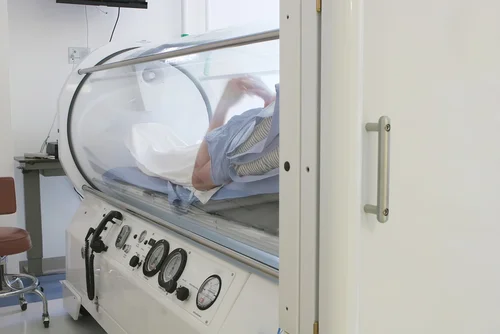
Hyperbaric therapy is frequently delivered through a chamber. “In a hyperbaric oxygen therapy chamber, the air pressure is increased to three times higher than normal air pressure. Under these conditions, your lungs can gather more oxygen than would be possible breathing pure oxygen at normal air pressure. Your blood carries this oxygen throughout your body. This helps fight bacteria and stimulate the release of substances called growth factors and stem cells, which promote healing.”[3]
In other words, hyperbaric oxygen therapy enriches your circulatory system with oxygen, where it is then delivered to tissues throughout the body. This flow then works in multiple ways. “Hyperbaric oxygen therapy:
Dissolves increased amounts of oxygen into the blood plasma.
Increases oxygen tension in hypoxic tissues.
Enhances white blood cell activity at the wound site.
Reduces edema by vasoconstriction.
Blocks cytotoxic effects of carbon monoxide and hypoxia associated with cyanide poisoning.
Accelerates formation of blood vessels (angiogenesis) and nerve endings in wounded tissue”[4]
The Benefits of Hyperbaric Oxygen Therapy
Hyperbaric oxygen therapy is extremely beneficial to the body back to health, as it “increases the dosage of oxygen and delivers more O2 to damaged areas in the body and stimulates the healing process.”[5] This therapy is also beneficial in that it:
assists healing by raising tissue oxygen levels to normal in areas where they are reduced through illness or injury.
encourages new blood vessels to grow and carry additional blood.
increases the ability of the body’s defense mechanisms to fight infection and kill bacteria.
helps reduce any swelling that may occur around the area.
Even more noteworthy, “20 sessions of hyperbaric therapy increases our stem cells eightfold!”
For More Information
Oxygen “is one of the most natural antibiotics and it controls over 8,000 genes,” thus explaining why oxygen-enriched therapies are so important in the fight against cancer.5Hyperbaric oxygen therapy is on the rise, and the prediction is that it will be integrated into more and more cancer treatments in the future. Dr. Jeffrey Niezgoda, president of the American College of Hyperbaric Medicine stated that “hyperbaric medicine is an incredibly powerful tool. It can be as helpful and therapeutic as a surgical scalpel in the right patient for the right indication. We’re seeing a rise in specialized wound and hyperbaric centers across the United States,” thus supporting its powerful ability to aid in cancer treatment, especially as an alternative medicine.[6]
CMN Alternative Cancer Treatment Hospital is a proud provider of hyperbaric oxygen therapy. To learn more about our comprehensive treatment plan or to schedule a video consultation with Dr. Payan at CMN Hospital please contact us.
References
[1]“Oxygen and Cancer.” Cancer Fighting Strategies.
[2]“The Science Behind Hyperbaric Therapy.” OxyHealth.
[3]“Hyperbaric Oxygen Therapy.” Mayo Clinic.
[4]“Hyperbaric Oxygen Therapy Fact Sheet.’ Kent Hospital.
[5]“Hyperbaric oxygen therapy for cancer patients.’ Natural Health 365.
[6]Olivero, Magaly. “Hospitals Tout Benefits of Hyperbaric Oxygen Therapy.”